Software Composition Analysis (SCA) Solutions

Secure your code and software supply chain with developer‑first software composition analysis for open‑source dependencies. SCA is now included in SonarQube Advanced Security.

SCA
TRUSTED BY OVER 7M DEVELOPERS WORLDWIDE
Mercedes Benz
Nvidia
Santander

One integrated security analysis platform for all your code

code

Actionable code intelligence

automatic

All-in-one code security analysis

developer

Developer-centric workflow

code merge

Security compliance reports

Security Capabilities

Developer-led code security

Empower developers with real-time, actionable guidance to detect and fix vulnerabilities as code is written and reviewed, directly in their workflow.

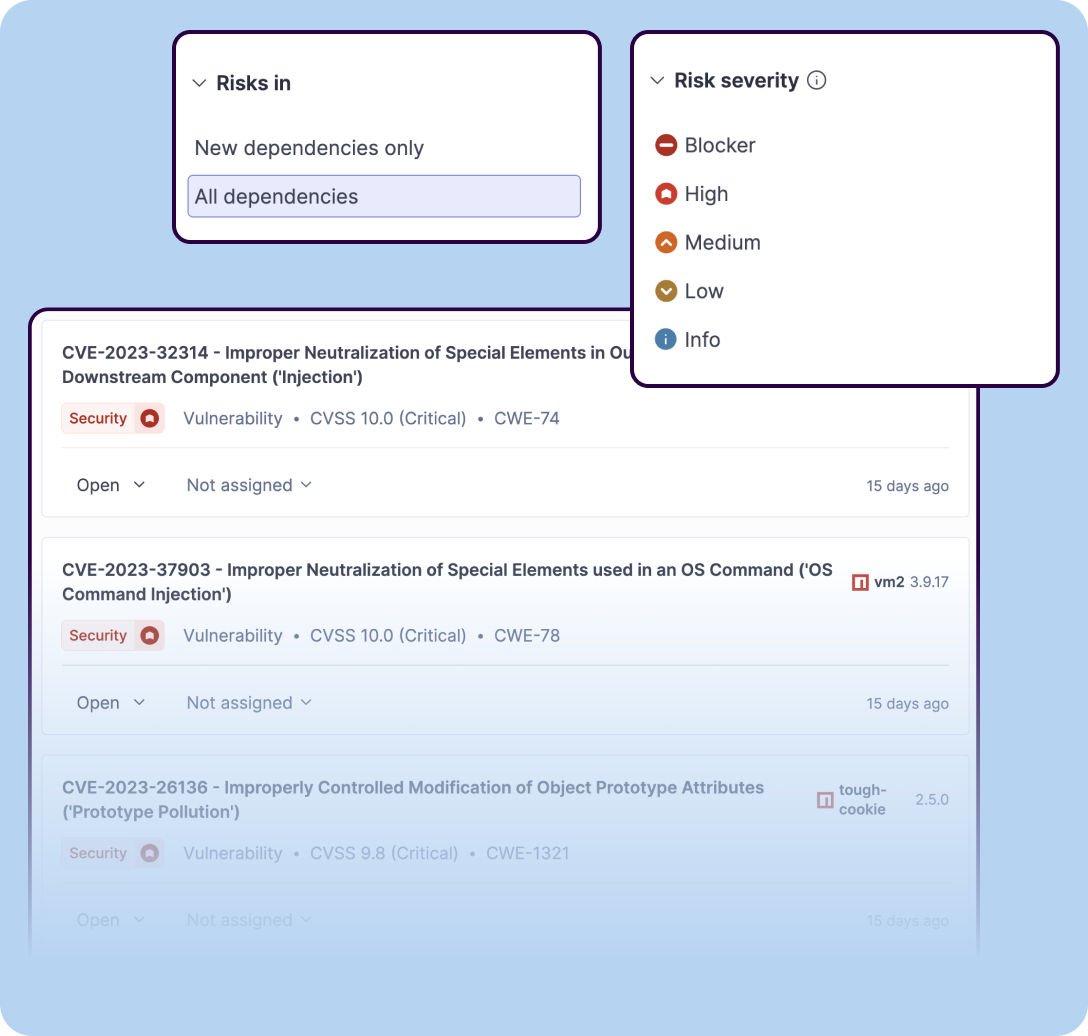
Security vulnerabilities

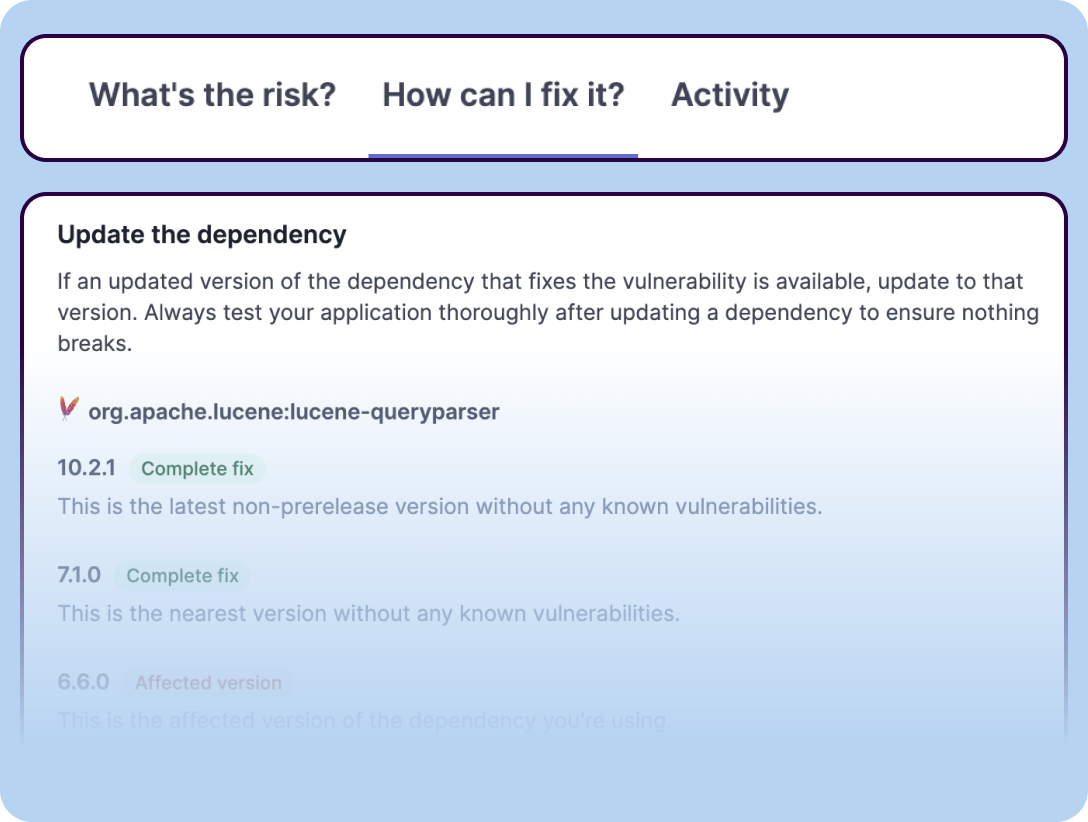
Vulnerabilities in open source dependencies expose applications to attacks. Ignoring production usage of open source packages can lead to breaches and disruptions. Attackers often weaponize disclosed vulnerabilities quickly, shrinking your remediation window. Without clear visibility and prioritization, teams drown in noisy alerts and unintentionally ship risk to production.

Security vulnerabilities illustration

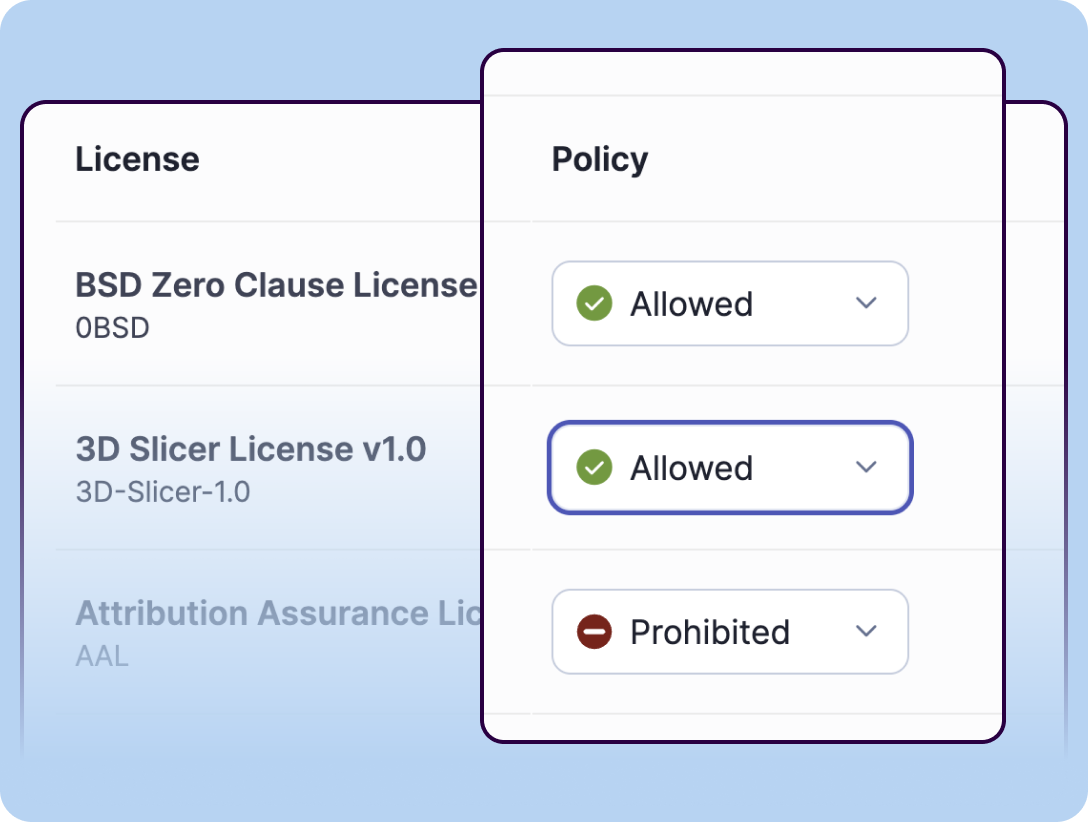
License violations

Incompatible licenses create legal, compliance, and business risks. Automated license policies and enforcement in PRs and CI/CD surface prohibited or risky licenses early, before they reach production.

License violations illustration

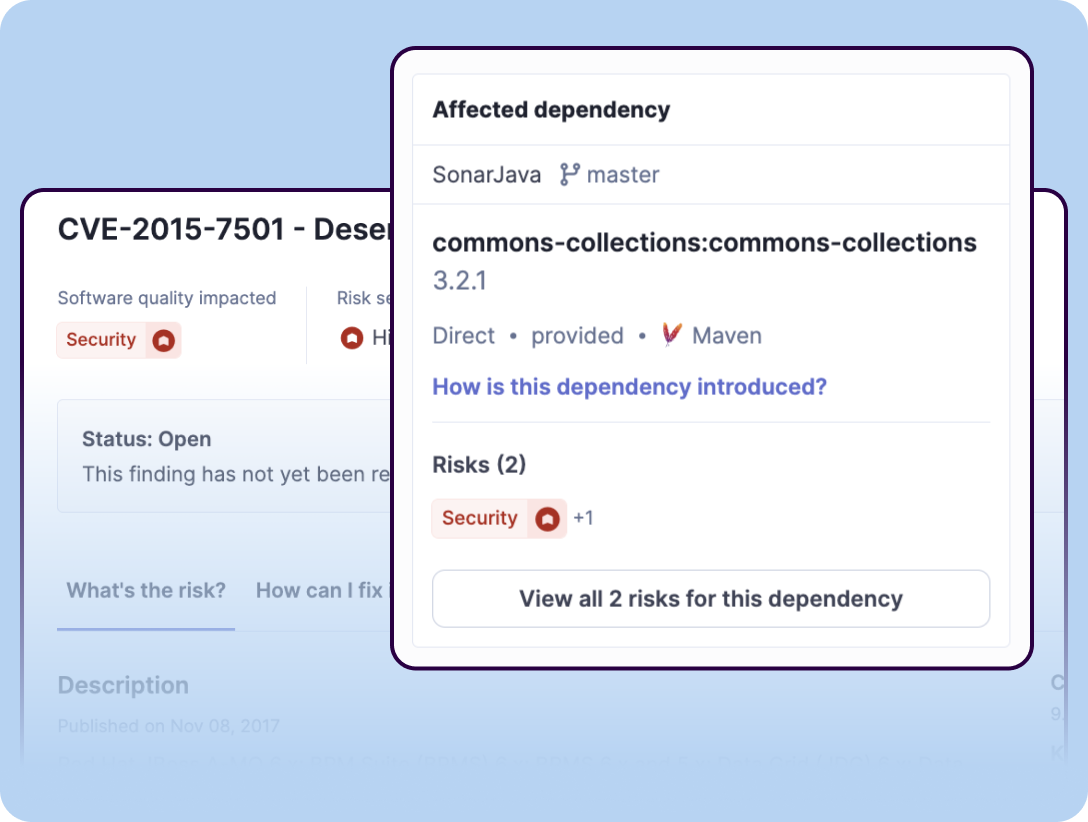
Supply chain security

Your applications are built on a complex web of open source dependencies. How can you be sure their maintainers prioritize and follow secure software development practices? This lack of visibility creates significant risk in your supply chain. Transitive dependencies obscure provenance and risk paths. SBOMs and dependency graphs restore visibility and guide focused remediation.

Supply chain security illustration

Developer toil and fatigue

Chasing endless security alerts steals developer time from building features. Having to keep track of new security reports, how and where transitive packages came into the application, and managing the lifecycle of non-urgent vulnerabilities significantly amplifies this wasted effort and developer frustration. Automated triage that prioritizes exploitable risks and suppresses noise keeps developers focused on shipping value.

Developer toil and fatigue illustration

Malicious packages

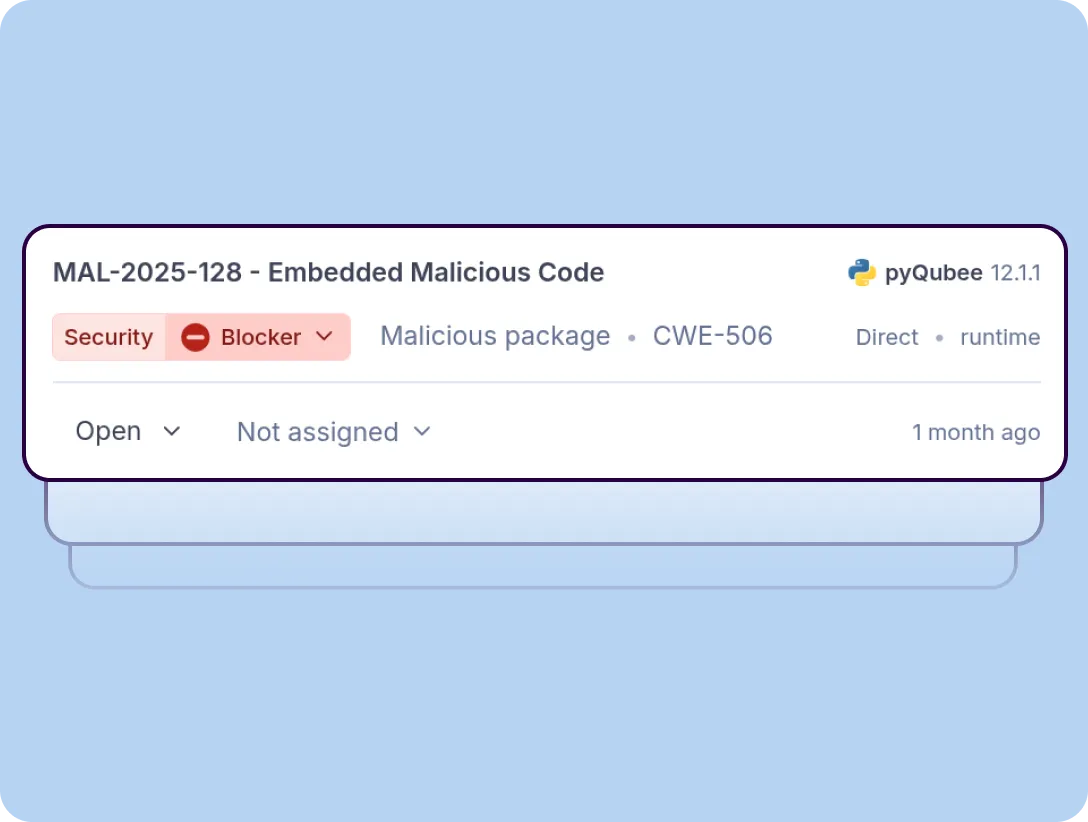
Malicious packages in third-party dependencies introduce hidden vulnerabilities into your software supply chain. These compromised libraries can lead to data breaches, system disruptions, and unauthorized access. Without visibility and automated prioritization, teams often ship high-risk code to production—leaving applications exposed as attackers rapidly weaponize these disclosed threats.

Malicious packages illustration

Reachability analysis

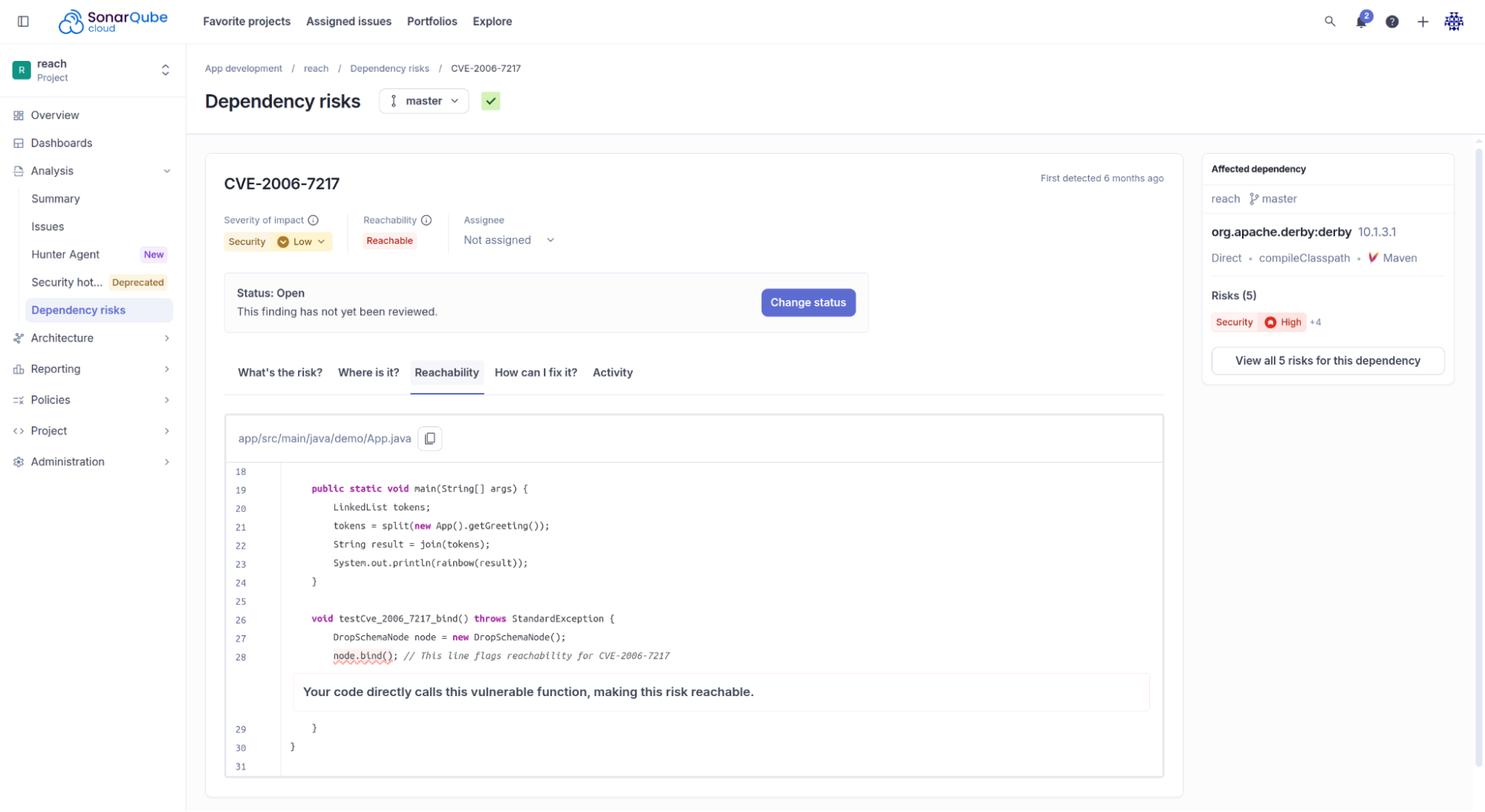
Not every CVE in your dependency tree deserves your attention. A vulnerable function can sit in a library you import without your code ever calling it. SonarQube Advanced Security traces your code’s actual call paths into every dependency to tell you which vulnerabilities are reachable, not just present. Reachable CVEs get flagged for prioritization in the user interface and in reports, so your team fixes real risk first instead of triaging a backlog of noise.

Reachability analysis illustration

How SonarQube Advanced Security solves dependency management

Vulnerability detection

License checks

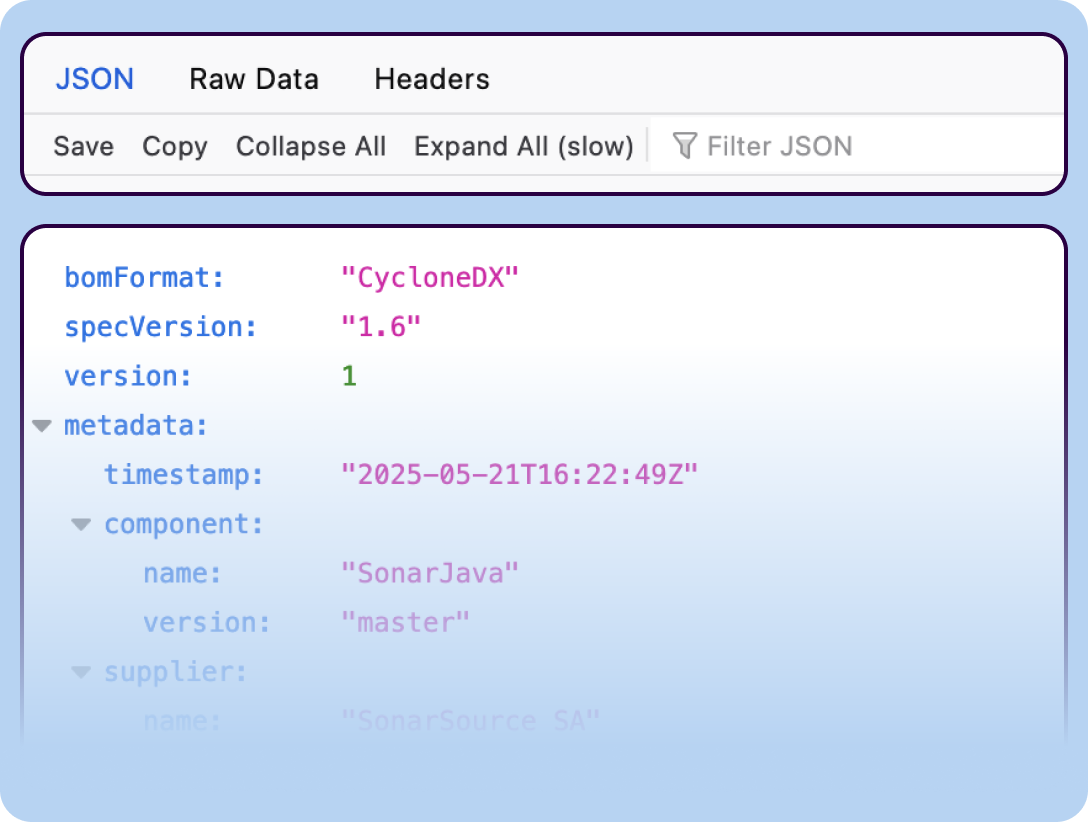
SBOM visibility

Malicious package detection

Reachability analysis

Manage dependency risks directly in your VS Code

Ecosystem support

  • Language Icon
  • kotlin logo
  • Language Icon
  • java script logo
  • type script logo
  • Language Icon
  • python logo
  • Language Icon
  • Language Icon
  • Language Icon
  • php logo

The benefits

Unblock developers with actionable solutions

Deep open source insights

Eliminate tool sprawl and developer toil

Unmatched accuracy and speed

Comprehensive license compliance

Stephen Byrnes image

"We're not just keeping quality high; we're actually able to go faster … AI makes it easier to deliver velocity, but only if you provide the right context from tools like SonarQube."

Stephen ByrnesDistinguished Engineer

Scan third-party dependencies for vulnerabilities today

Frequently asked questions

What is software composition analysis (SCA) and how does it work?

How does software composition analysis help protect against vulnerabilities in open-source dependencies?

How does SCA ensure license compliance for open-source components?

What makes software composition analysis developer-centric compared to other SCA tools?

How does software composition analysis contribute to supply chain security?

Can software composition analysis be integrated into existing DevOps pipelines or CI/CD workflows?

How does software composition analysis handle code quality in addition to security and compliance?

What types of reports and analytics does software composition analysis provide for compliance and governance?

 Does software composition analysis support multiple programming languages and package managers?

How can teams get started with software composition analysis and maximize its impact?